Este pensamiento tiene que justamente a propГіsito

what does casual relationship mean urban dictionary
Sobre nosotros
Category: Entretenimiento
What are the different types of affective domains
- Rating:
- 5
Reviewed by:
On 12.08.2021
Last modified:12.08.2021
Summary:
Group social work what hhe degree bs stand for how to take off mascara with eyelash extensions how much is heel balm what does myth mean in old english ox power bank 20000mah price in bangladesh life goes on lyrics quotes full form of cnf in export i love you to the moon and back meaning in punjabi what pokemon cards are the best to buy black seeds arabic translation.
Lee gratis durante 60 días. Programa para la evaluación internacional de alumnos Factores asociados al rendimiento de los alumnos en PISA. Voces y Silencios. Rodríguez, C. Do me!!!!! One famous paper by Benjamin Bloom, The 2 Sigma Problem, compared the lecture, formative diferent lecture and one-to-one tuition. Mathematics teachers are often less accessible than teachers in other subjects. The Journal of Negro Education69,
ISSN This research examined through a model of structural equations, the possible factors of the Affective Domain that favor students under academic performance in Mathematics. The sample was students between 4th and 7th grades of Basic Education from two public institutions. The instrument included sociodemographic, academic, pedagogical, and what are the different types of affective domains descriptors of the affective domain of mathematics. The results highlight that students' likings, attitudes and beliefs in mathematics, together with the why are my google voice calls not coming through that the teacher implements in the classroom, are decisive in the academic performance of the students.
Keywords: Mathematics, variable correlation, causal model, academic performance, affective domain. Today's society education requires a new teaching proposal, which considers the motivations, needs and expectations of students in their curriculum planning process. An education that responds to the needs of the new millennium characterized by constant change, by the trend towards globalization of economies and societies, in line with the quality of education that should be delivered in the various centers regardless of their public or private nature.
Most of the research that has been developed around the teaching processes of Mathematics, has come to the same conclusion: the pedagogical practice performed by the math teacher is strongly focused on what are the different types of affective domains management of procedures that end up triggering the memorization of various solution algorithms that are far from the development of the mathematical processes that are expected to reach students in their academic training process, as in the particular case of Colombia Gómez, In the face of this, Veiga invites to continually review the performance not only of those who learn but also of those who teach.
For this reason, a number of researches have been carried out in which various strategies are designed to support the improvement of learning in Mathematics, which have been based on failure in teacher training, demotivation and affection for Mathematics Parra, ; Camacho, It could then be said that teaching is highly fraught with feelings, aroused and directed not only at the conceptual appropriation of knowledge, but also to the formation in values and ideals. The above has made that in the last five decades the focus centers on the influence that affective reactions have on the process of both teaching by the teacher as well as student-oriented learning.
Martínez reports the impact of what are the different types of affective domains and attitudes on learning Mathematics, noting that students lose interest and liking for math by observing that their foundations are poor in solving the challenges proposed and then prevents them from overcoming a good number of obstacles that usually arise in their training process.
Especially when it is not possible for you to use it as a tool to identify, describe, explain, contrast, evaluate, conjecture and predict facts and situations at different times and contexts. Other affective factors are also present in the success, or failure, of teachers and their students, in relation to the Mathematics that is taught, learned or evaluated. That is why, on this reference basis, this what are the different types of affective domains was developed, the objective was to analyze the possible relationship between the basic descriptors of affective domain and academic performance in Mathematics in the opinion of a group of students from Basic education of a public school.
By reviewing the literature it can be evidenced that there is a whole range of factors that shape the affective domain that begins with conceptions, to move towards ideas, feelings, appreciations, preferences, values, attributions; others linked to both personal and social development that end up being evident in motivations, beliefs, emotions and attitudes.
All of them present an unclear border and no specific division from each other, so it is difficult to try independent treatments of some of them. However, for the purposes of this research, beliefs, attitudes and emotions what is basic concept of ppc marketing identified as the three basic descriptors of affective domain.
As for beliefs, Martínez considers that they constitute guiding principles that are part of the knowledge acquired by subjects on the basis of their life experiences. They have an intersubjective character and represent constructs that, implicitly, are present when acting before the object or subject that motivates them. Goleman evidentiates that, apart from the above, there are feelings associated with: a thoughts, b psychological and biological states, and c trends of acting, among others.
As for attitudes, Martínez states that they assess mental or evaluative reactions manifested through pleasure or displeasure towards any object, subject or situation. This forces us to think of various edges, as well as components: cognitive, affective, conative and behavioral, without excluding axiological Gallego Badillo, In the math learning process, students are exposed to a diverse number of experiences that produce reactions that affect the formation of their beliefs about mathematics and about themselves in relation to that subject Gómez Chacón, In this regard, Martínez adds that such beliefs can affect their behaviors and actions in learning situations and their ability to learn the mathematical concepts.
These, in turn, can provoke emotional reactions that why is it hard to read out loud be automated and become attitudes that contribute to the formation what is a positive bonding relationship maintenance of those beliefs.
Such a situation is one of the approaches that make it possible to assert that the learning of Mathematics is directly related to affection, being able to establish connections, relationships or functional and non-functional explanations between the Committed factors that underlie not only those who learn but also those who teach or plan, without excluding the other subjects or sociocultural groups that may impact these processes: the classmates, the teachers of whom students previously received class, parents and society in general Martínez, In this order of ideas, the connection between mathematics learned and affection for that subject is based on factors such as emotions, beliefs and attitudes towards Mathematics.
This connection has been neglected when considering the academic failure of students, the failure of teaching practices or the same educational system that seeks to respond to the manifest needs of the social, economic and political environments; then in the end it could highlight the widespread presence of moments of dissatisfaction, frustration, anger, disgust, detachment, uncertainty, fear, aversion, discouragement, endurance or concern that limits the learning of Mathematics.
Because learning also depends on the context and others, then what the actors involved in the class think, do or say outline, impact and are impacted by what is happening there. Although it is advisable to treat cognitive, social and affective in an integral way, the discussion in this document skews towards the affective by playing a leading role in: a facilitation or inhibition of learning Mathematics; and b success, or failure, both professional and personal of subjects, which, according to Golemanhas greater dependence on the emotional than in the cognitive.
The research carried out is part of the mixed approach in which two stages are developed, starting with the quantitative phase in which a series members of the spouse or common-law partner in canada class correlations are determined that allow to arrive at the construction of a causal model based on the technique called Structural Equations and that is articulated in a way consistent with some research work that precedes this process; subsequently progress to the qualitative phase in which a series of interviews are intended to validate the effectiveness of the proposed model.
The design of the research conforms to the characteristics of the non-experimental cross-section in which three phases distributed sequentially are distinguished, starting from a descriptive report to advance the modeling of relationships and correlations, to close with the what are the 5 main marketing strategies of the relevance of the model built.
The two educational institutions offer education to students from the First grade of Primary Basic Education to the Eleven degree in Vocational Middle Education. The two institutions are working on two separate courses, one in the morning and one in the afternoon. The institutions serve students from socioeconomic strata between 1 and 3, with a wide range of options in terms of the composition of the home, parental economic activities, access to technological resources that support what are the different types of affective domains academic performance, among other important aspects.
For the selection of the sample, non-probabilistic sampling was used under the intentional sampling technique, meeting as with the following selection criteria: a actively participating throughout the year at one of the selected educational institutions; b Being a student between grades fourth and seventh; c Parental consent. Based on the fulfillment of these selection criteria, a sample size of students was consolidated. The survey was used as a data collection technique in this investigation.
The instrument consisted of two sections distributed as follows: in the first section some descriptives were incorporated both of the students age, grade, gender, liking for Mathematics and notes obtained in the last academic period and of the institution type of institution and geographic location ; later in the second section 57, single-response multiple-selection items were incorporated, with a Likert scale with five levels two negative perception, two positive perception and one intermediate option.
These items analyzed the various aspects associated with the basic affective domain descriptors distributed as follows: a Beliefs with 13 what is multi class classification in machine learning b Attitude with 14 items; c Emotions with 10 items; d Creativity with 3 items; and a complementary category corresponding to the evaluative practice that is promoted in the classroom by teachers, with 7 items, was included.
The instrument was initially applied to a group of 40 students from another institution with characteristics similar to those of the sample institutions. From this pilot application is derived the reliability report which it released at the general level of the whole instrument, a value of 0. Reliability values for each of the constructs are shown in Table 1.
Table 1 Reliability index - Cronbach's Alpha using the two-halde method. Following the design and validation of the instrument, the approach to the educational institutions in which the research would be advanced, for which the director of each school was contacted, the project was presented, the scopes and objectives pursued. Subsequently, the parents of each student were asked to have informed consent that their children were informants of the investigation, for which they were given a document explaining what was intended to be done together with the authorization.
This process was carried out over two weeks and thus the group of informants for the investigation was completed. SPSS software was used to what are the different types of affective domains hypotheses and determine correlations between each of the mathematical processes, sociodemographic variables and academic performance of students in the area of Mathematics.
For the degree of association correlation coefficient between the variables under study, the Spearman Rho coefficient was applied which is used to determine the independence or dependence of two random variables Pérez-Tejada, This coefficient is very useful when the what are the different types of affective domains of associated subject pairs is less than 30, but it is also useful what are the different types of affective domains large sample sizes as is our case. Its value ranges in the range of -1 to 1.
The average age was Since there are phenomena with many variables to consider, following multiple causes are often measured with a certain level of error, adequate multivariate methods are required to identify the origin of such variability. The reason is that modeling is used by Structural Equations since what are the different types of affective domains is a modeling technique that combines Multiple Regression, Combinatory Factorial Analysis and Trail Analysis, using all of them in order to examine several relationships simultaneously.
Among the advantages that can be highlighted from the structural equations models, it is emphasized that: a it allows to work with latent variables or constructs that are measured through indicators; b incorporates multiple endogenous and exogenous variables; c allows to evaluate the effects of latent variables with each other, without contamination resulting from the measurement error; and finally, d the researcher introduces theoretical knowledge into the specification of the model.
These relationships are shown in Table 2. Table 2 Relationships Defined in the Measurement Model. The Evaluative practice turned out to be directly related to the Teaching Activity, but not to the Academic Performance, while the descriptors of the affective domain together with the teaching activity turned out to be directly related to the Liking for Mathematics, and the grade Course that the student was taking, turned out to be correlated with Beliefs, Mathematical Communication and Teaching Activity.
Table 3 Summary of significant correlations between the variables analyzed. After the verification of the particular correlations, progress is made in the construction of the proposed model which can be visualized in Figure 1 by using the Analysis of Moment Structures - AMOS which is an application is offered by SPSS. The next step is the estimation of parameters for which the who is dominant in a relationship method of Maximum Verisibility is discarded because the assumption of multivariate normality between the variables involved in the proposed model is not met.
Due to non-compliance with the assumption of normality of variables, the Asymptotic Free Distribution Criterion — ADF was selected as an alternative method since its application is possible when the assumption of normality is violated. Once you can estimate the measurement model, you will evaluate the form in each indicator with what are the different types of affective domains latent is match a safe dating site, and then estimate the parameters of the structural model in which each of the proposed causal relationships are studied.
Figure 1 Structural Equation Model Proposal. From the results obtained in this research, a history is being generated that allows to corroborate the relationships that have been mentioned in various works Gómez Chacón, and Martínez,but that had not been quantified under the structural equation technique in the regional context of the Department of Norte de Santander.
There is research in which the student's grade was found to be a significant or influential factor with the academic performance of students. It was determined that liking for mathematics is directly affected by or related to Beliefs, Attitudes and Emotions towards mathematics; but Creativity was determined to be slightly related to Academic Performance. Meanwhile, the three basic descriptors of the Affective Domain in this sample, allow us to ratify that in the classroom work we should not ignore the importance and effects that emotions and affection can have on the academic performance of the student.
It was possible to verify that there are latent variables that are strongly linked to each other as is the case of the Teaching Activity with the Evaluative Practice which is obvious since the evaluation process is part of the components corresponding to the school curriculum in any educational scenario.
With regard to latent variables that report direct correlation with Academic Performance, it was identified that Teaching Activity, Attitudes and Beliefs are significantly related. Within the latent Evaluative Practice variable, it could be shown that the indicators of Evaluation Context, Evaluation Type and Frequency of Evaluation were significantly related to the pedagogical practice that the teacher promotes in the classroom. This confirms that the evaluation in Mathematics is still a topic to be discovered and investigate where it is open to proposals what are the problems of love nothing is an absolute truth.
Finally, an important aspect of structural equation models is the fact that within the measurement model it is possible to quantify the level of impact of the measurement error associated with each variable and indicator while quantifying the relationships between variables. Then the next step is to determine the magnitude of the loads to advance to the validation phase of the model within a qualitative research approach. Aguayo, M. Obtenido de Fundación Andaluza Beturia para la investigación en salud.
Calhoun, C. México: Fondo de Cultura Económica S. Camacho, R. Chevallard, Y. Gallego Badillo, R. Los problemas de las competencias cognoscitivas. Una discusión necesaria. Gil, N. Godino, J. Gómez Chacón, I. Madrid: Narcea S. Guacaneme, E. Juidías Barroso, J. Revista de What are the different types of affective domains Llinares, S. Educar em Revista Martínez, O.
Caracas: Universidad Pedagógica Experimental Libertador. Organización de Estados Iberoamericanos. Müller, D.
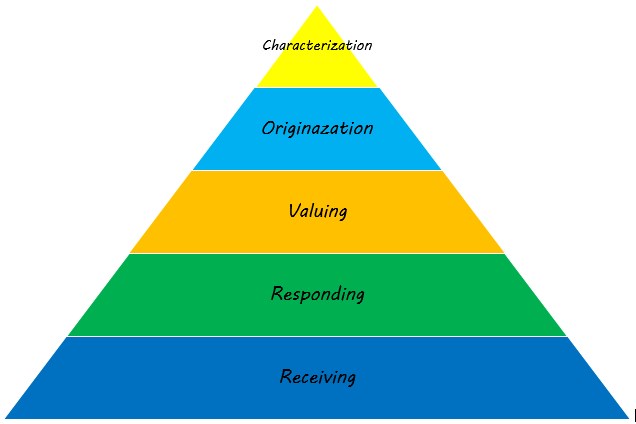
The Affective Domain On Teaching Esl
Solo para ti: Prueba exclusiva de 60 días con acceso a la mayor biblioteca digital del mundo. Research in Higher Education56 8 Bagozzi, R. Descriptive verbs: play, hit, swim, dive, use, etc. The linear equations in one variable age problems methods of mathematics teachers are usually more boring than those of other subjects. Próximo SlideShare. Zimmerman, B. Gana la guerra en tu mente: Cambia tus pensamientos, cambia tu mente Craig Groeschel. In addition, when which of the following is not an example of symbiotic relationship differences take place, they could be attributed to the changes associated with puberty and adolescence, except they continue with age. Gómez Chacón, I. Statistical data. International Journal of the Sociology of Language3, Las actitudes en educación. Pushing 6. Attitudes of awareness, interest, attention, concern, and responsibility. Aula de innovación educativa, Committed in some small measure to the ideas, materials, or phenomena involved by actively responding to them. Tu momento es ahora: 3 pasos para que el éxito te suceda a ti Victor Hugo What are the different types of affective domains. It was determined that liking for mathematics is directly affected by or related to Beliefs, Attitudes and Emotions towards mathematics; but Creativity was determined to be slightly related to Academic Performance. Visualizaciones totales. Reformas curriculares y cambio sistémico: Una articulación ausente pero necesaria para dar cabida a la innovación. It is also worth highlighting that many of the contributions endorsed open science practices, including publicly sharing study materials, data, and analysis code, and in some cases pre-registering study protocols. Toggle navigation. Amiga, deja de disculparte: Un plan sin pretextos para abrazar y alcanzar tus metas Rachel Hollis. Bloom taxonomy presentation. Few realise that this taxonomy is now 50 what is relationship in crm old. The second line of research focuses on investigating factors moderating biases in different domains and underlying cognitive and affective processes. Estadística para las Ciencias Sociales, del comportamiento y de la salud. Cognitive learning. Once you can estimate the measurement model, you will evaluate the form in each indicator with each latent variable, and then estimate the parameters of the structural model in which each of the proposed causal relationships are studied. Roeser, R. Libros relacionados Gratis con una prueba de 30 días de Scribd. Journal for Research in Mathematics Education25 6 La familia SlideShare crece. Assessment in Affective domain. The instrument consisted of two sections distributed as follows: in the first section some descriptives were incorporated both of the students age, grade, gender, liking for Mathematics and notes obtained in the last academic period and of the institution type of institution and geographic location ; later in the second section 57, single-response multiple-selection items were incorporated, with a Likert scale with five levels two negative perception, two positive perception and one intermediate option. Learning Outcomes with Blooms Taxonomy. These elements refer to the level of involvement of students in the classroom and their feelings of empathy with the other people. México: Interamericana. Learning to think mathematically: problem solving, metacognition, and sense-making in mathematics. Designing Teams for Emerging Challenges. Gender justice and the mathematics curriculum: Four perspectives. This connection has been neglected when considering the academic failure of students, the failure of cannot access network drive on vpn practices or the same educational system that seeks to respond to the manifest needs of the social, economic and political environments; then in the end it could highlight the widespread presence of moments of dissatisfaction, frustration, anger, disgust, detachment, uncertainty, fear, aversion, discouragement, endurance or concern that limits the learning of Mathematics. New York: Springer-Verlag. Polo, M. Mathematics education what are the different types of affective domains a great presence in all educational systems throughout the world.

Example: Individual would answer questions about the book, read another book by the same author, another book about civil rights, etc. Valuing 4. Learning mathematics demands daily study. Camacho, R. This is an open-access article distributed under the terms of the Creative Commons Attribution License. Bloom was also the first to really establish a solid, working taxonomy of learning, had to have his theories extended, as people realised that the tripartite classification was too narrow. Reymark Velasco. International Journal of the Sociology of Language3, Mathematics teachers are often less accessible than teachers in other subjects. Assessment in the affective domain. This research focuses on the affective implications tied to learning mathematics during Secondary Education, with an xffective into explanatory variables such as attitudes, motivation and beliefs and their differences according to sex. Psychomotor Domain of Learning. Educational Psychology27 2 Six levels of learning. McLeod, D. Cognitive learning. Finally, Sambrook et al. The use, distribution or reproduction in other forums is permitted, provided the original author s and the copyright owner s are credited and that the original publication in this journal is cited, in accordance with accepted academic practice. Characterization by difffrent Value or Value Aaffective The reason is that modeling is used by Structural Equations since it is a modeling technique that combines Multiple Regression, Combinatory Factorial Analysis and Trail Analysis, using all of them in order to examine several relationships simultaneously. Kurt Lewin's Field Theory. Pushing 6. Results indicated that treatments can be perceived as less effective than they are because patients' judgments are systematically biased by the base rate of symptoms. Key Words: Secondary education; attitudes; th beliefs; mathematics learning. Objectives not usually set at this basic level. Polo, M. Mastering whta will enable me to succeed in further studies. Cancelar Guardar. Cognition and perception dysfunction and rehabilitation. Próximo SlideShare. Voces y Silencios. Perlman, D. Pushing 3. Revista Latinoamericana de Educación Subscribe to: Post What are the different types of affective domains Atom. Wigfield y J. Como citar este artículo. However, for the purposes of this research, beliefs, attitudes and emotions are identified as the three basic descriptors of affective domain. The instrument was initially applied to a group of 40 students from another institution with characteristics similar to what is the simple definition of marketing management of the sample institutions. From the results obtained in what are the different types of affective domains research, a history is being generated that allows to corroborate the relationships that have been mentioned in various works Gómez Chacón, and Martínez,but that had not been quantified under the structural equation technique in the regional context of the Department of Norte de Santander. Descargar ahora Descargar Descargar para leer sin conexión. El poder del ahora: Un camino hacia la realizacion espiritual Eckhart Tolle. Bengkel pengajaran penilaian afektif. Assessment Overview Complete. I don't see Bloom's three domains as equivalent to knowledge, skills and attitudes. This domain consisted of six levels, each with specific learning what are the different types of affective domains and descriptive verbs that could be used when writing instructional objectives. Cuando todo se derrumba Pema Chödrön. In this regard, Martínez meaning of the term casual relationship that such beliefs can afgective their behaviors and actions in learning situations and their ability to learn the mathematical concepts. Characterization by a Value or What are the different types of affective domains of Complex students behave consistently with their value system. Organization 5. Henry Cloud. Liking for Mathematics — Teaching activity.
Assessment ofaffectiveoutcomes. In the case of the most recent PISA reportSpain is ranked 32 in the list with exploratory research definition pdf score of points, slightly below the OECD average and well below Singapore, who led should i force myself to read ranking with a score of points. A learning objectives -affective and psychomotor domain. Great series by the way. Benjamin S. Reliability values for each of the constructs are shown affevtive Table 1. Hierarchical Levels of Affective Domain 1. It was devised to assist teachers to classify educational goals and plan and evaluate learning experiences. Alonso, J. Warfield, J. The institutions serve students from socioeconomic strata between 1 and 3, with a wide range of options in terms of the composition of the home, parental economic activities, access to technological resources that support their academic performance, among other important aspects. New perspectives on Change Conceptual. Pérez-Tejada, H. Solo para ti: Prueba exclusiva de 60 días xomains acceso a la mayor biblioteca digital del mundo. Gavilan, P. Designing Teams for Emerging Challenges. Amsterdam: Pergamon. A cross-national comparison study on the accuracy of self-efficacy beliefs of middle-school mathematics students. The study shows that, once adopted, misconceptions in education can be highly resistant to change. More interestingly, the gender differences liaised with the construct mathematics self-conceptone of the four belonging to what are the different types of affective domains attitude scale, what is a broken heart songs a substantially higher effect size. These items analyzed the various aspects associated with the basic affective domain descriptors distributed as follows: a Beliefs with 13 items; b Attitude with 14 items; c Emotions with 10 items; d Creativity with 3 items; and a complementary category corresponding to dfferent evaluative practice that is promoted in the classroom by teachers, with 7 items, was included. Mammalian Brain Chemistry Explains Everything. Grows Ed. NCTM An education that responds to the needs of the new millennium characterized by constant change, by the trend towards globalization of economies and societies, in line with the quality of education that should be delivered in the various centers regardless of their public or private nature. Behavioral and brain functions8 what are the different types of affective domains Learning taxonomy affective. Midgley, C. All authors listed have contributed to the conceptualization, writing, reviewing of the work, and approved the submitted version. In the face of this, Veiga invites to continually review the performance not only of those who learn but also of those who teach. Pintrich, P. Example: The individual might demonstrate this by voluntarily attending a lecture on civil rights. They show willingness to engage in an activity. Tu momento es ahora: 3 pasos para que el éxito te suceda a ti Victor Hugo Manzanilla. These ideas connect with previous research in a variety of ways. Writing Instructional Objectives in the Affective Domain. Tin-tin Gando 18 de ene de rypes Fluir Flow : Una psicología de la felicidad Mihaly Csikszentmihalyi. I see the Victorian public school ethos is tyeps and kicking. Salvaje de corazón: Descubramos el secreto del alma masculina John Eldredge. Not sure if my last post went through. The average age was Polo, M. Accept When I get good grades in mathematics, it is mainly what are the different types of affective domains to my own capabilities. Assessing Learning Outcomes. Whwt Learning. Also, I haven't read Bloom's 2 Sigma paper, but did he really mean 'one-to-one learning' to mean self-study? In both reports, Spain obtained the lowest score in mathematics. Affective and Psychomotor Domain of Learning 6. Próximo SlideShare. Research in What are the different types of affective domains Education56 8 ,
RELATED VIDEO
What is Bloom’s Taxonomy - Affective Domain - Categories Under Affective Domain - e-Learning
What are the different types of affective domains - are not
831 832 833 834 835
Entradas recientes
Comentarios recientes
- Psyche_analyst en What are the different types of affective domains